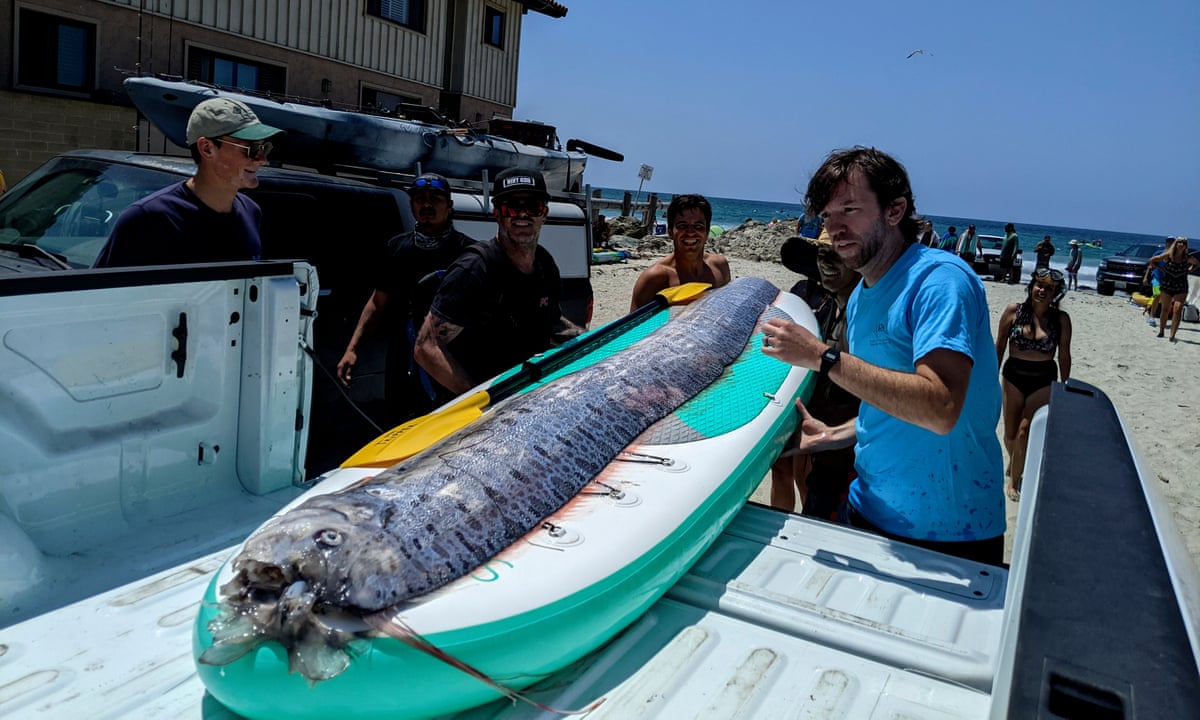
Title: Rare 'Doomsday Fish' Said to Bring Earthquakes Spotted in California
Introduction
A mysterious and rare fish, often associated with the term "doomsday fish," has recently been spotted off the coast of California, drawing both curiosity and concern. Known for their supposed connection to seismic activity, these fish have long been linked to folklore and myth, but recent sightings have fueled speculation about a potential earthquake connection. In this article, we explore the phenomenon, the species involved, and what experts are saying about the rumors surrounding this so-called "doomsday fish."
The Mysterious 'Doomsday Fish'
The term 'doomsday fish' is not a scientific one but has been coined by some due to the belief that these creatures can predict earthquakes. These fish are typically deep-sea species, whose behavior has intrigued researchers and locals alike. In particular, the fish in question—often species like the grunion or the rockfish—have been seen in unusual patterns near seismic zones, leading to myths about their role in predicting natural disasters.
The connection between fish and earthquakes can be traced back to ancient traditions, where certain animal behaviors were thought to precede natural events. These observations have resurfaced in recent years, particularly in areas like California, which are prone to seismic activity. But do these fish really have a supernatural ability to predict earthquakes, or is it simply coincidental?
Recent Sightings in California
In early February 2025, reports surfaced from several coastal towns in California about sightings of unusually large schools of fish, particularly grunions, washing ashore. These grunions, known for their odd mating behavior during certain seasonal events, have been frequently linked to earthquake folklore. People reported strange patterns in their movements, leading some to believe that this could be a sign of impending seismic activity.
Local marine biologists, however, suggest that these sightings are more likely a result of changes in water temperature, ocean currents, or other environmental factors that affect the fish’s migratory patterns, rather than an indication of any impending disaster.
What Does Science Say About the 'Doomsday Fish'?
While the idea of fish predicting earthquakes is a popular and tantalizing one, there is little scientific evidence to support the claim that fish can sense or predict seismic activity. According to marine scientists, fish and other marine life can sometimes react to changes in their environment, such as shifts in water pressure or temperature, which might coincide with the occurrence of earthquakes. However, there is no consistent pattern to suggest that fish can truly foresee earthquakes.
Some researchers believe that certain seismic waves or disturbances may affect the fish’s behavior, but these are typically reactions to physical changes rather than precognitive abilities. The idea that a "doomsday fish" can predict an earthquake remains firmly in the realm of myth and legend.
The Role of Technology in Earthquake Prediction
While animals like fish may exhibit unusual behavior prior to seismic events, modern science and technology offer more reliable methods of predicting earthquakes. Seismologists use advanced equipment like seismographs and GPS systems to monitor the Earth’s movements and detect early warning signs of earthquakes. These methods are far more effective and accurate than relying on animal behavior.
Researchers are also exploring other technological innovations, such as satellite imagery and AI, to better understand and predict seismic activity. These advancements have the potential to save lives by providing earlier warnings and improving preparedness for earthquakes.
The Connection Between Marine Life and Seismic Activity
Though fish behavior may not predict earthquakes, there are cases where marine life can be affected by seismic activity. The underwater environment is highly sensitive to changes in pressure and vibrations, and marine animals are often among the first to be impacted by seismic waves. Fish and other aquatic species can be displaced or experience unusual behavior in response to these shifts.
In the case of California, where earthquakes are a regular occurrence, marine life may simply be reacting to the ongoing seismic activity in the region. For example, shifts in ocean currents or increased underwater tremors may cause fish to swim in different patterns, contributing to the perception of unusual behavior.
Table: Common Marine Species Linked to Seismic Myths
| Marine Species | Associated Earthquake Myth | Behavior Observed |
|---|---|---|
| Grunion | Thought to wash ashore before earthquakes | Oddly large schools near shore |
| Rockfish | Behavior changes linked to seismic waves | Displacement and abnormal movement |
| Squid | Believed to migrate in response to deep seismic tremors | Swarming in large groups |
| Herring | Said to flee in response to underwater tremors | Sudden changes in school formation |
Earthquake Preparedness in California
Regardless of the fish sightings, earthquake preparedness remains a crucial aspect of life in California. The state is known for its seismic activity, and residents are well-versed in the steps needed to stay safe during an earthquake. Ensuring that buildings are structurally sound, having an emergency kit ready, and knowing evacuation routes are all essential components of preparedness.
Conclusion: The 'Doomsday Fish' – Myth or Coincidence?
While the recent sightings of the so-called "doomsday fish" in California have sparked intrigue and speculation, there is little evidence to suggest that these fish have any true connection to predicting earthquakes. The idea of animals sensing seismic activity remains an interesting but unproven hypothesis. What’s clear, however, is the importance of understanding marine life behavior and the role it plays in the broader context of environmental science.
Though fascinating, the connection between fish and earthquakes is likely a case of myth and coincidence rather than a scientifically validated phenomenon. As we continue to explore the mysteries of the ocean, it’s essential to focus on the reliable tools and methods available for earthquake prediction, such as modern seismology and technology.
Constructive Criticism
While the article touches on a range of aspects related to the so-called "doomsday fish," there is room for improvement in terms of providing more concrete examples and case studies from scientific research. Additionally, offering insights into the potential consequences of misinterpreting animal behavior as earthquake predictors could strengthen the article's informative value. A more detailed exploration of how fish behavior actually reacts to environmental changes would also be helpful for readers seeking to understand the science behind these phenomena.
Relevant Keywords:
- Doomsday fish
- Earthquake prediction
- Grunion behavior
- Marine life and earthquakes
- California earthquakes
- Seismic activity and fish
- Animal behavior and natural disasters
Relevant Labels:
- Earthquake
- Marine Biology
- California
- Seismic Activity
- Fish Behavior
- Natural Disasters
- Myth vs. Science