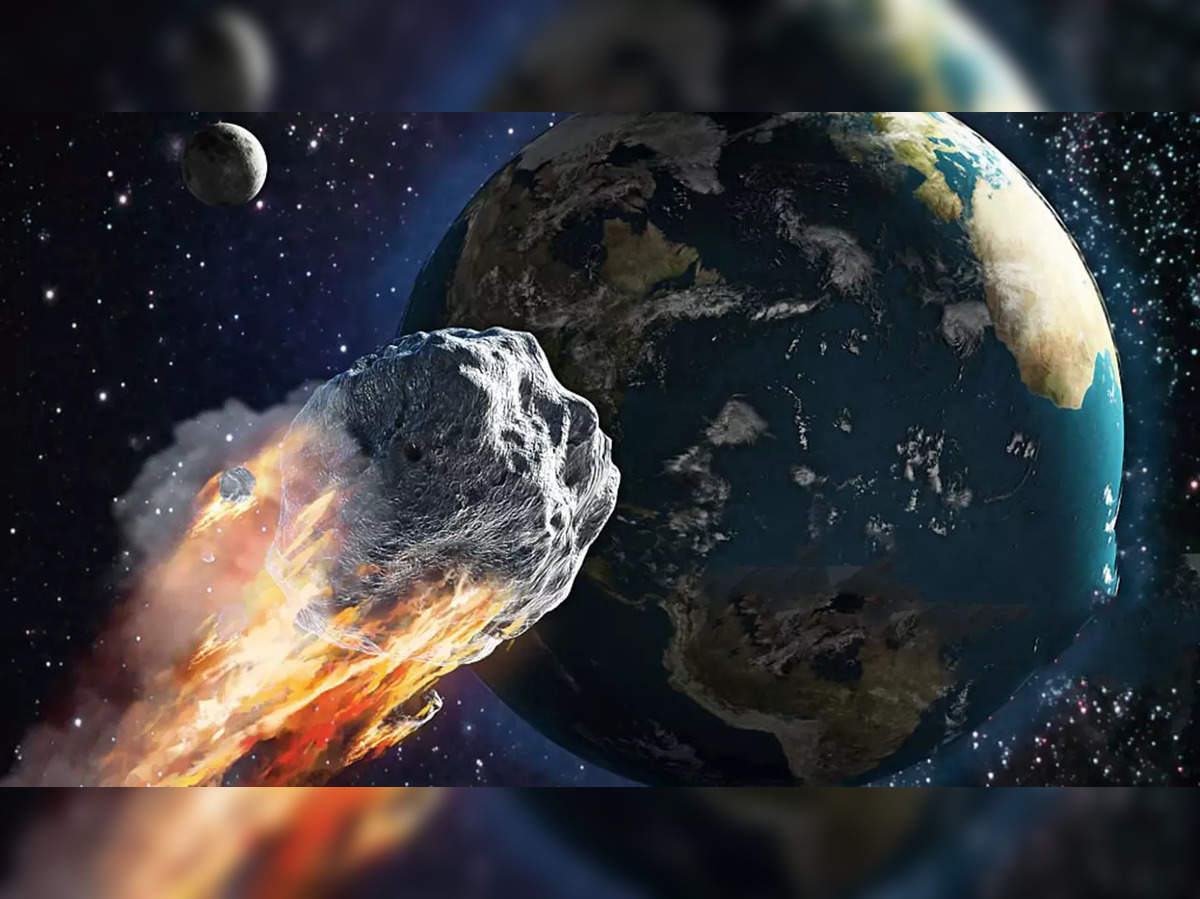
NASA's Asteroid Impact Warning: What You Need to Know About Potential Threats to Earth"
Introduction
The idea of an asteroid hitting Earth has been a common theme in science fiction for decades, often depicted as a cataclysmic event leading to the end of civilization. However, the possibility of a real asteroid impact is not a fantasy — it's a concern that scientists, including those at NASA, take very seriously. While the likelihood of a catastrophic asteroid strike is low, the potential consequences of such an event could be devastating. In this article, we will explore NASA's efforts to monitor and prevent asteroid impacts, the science behind asteroid tracking, and the ongoing research into mitigating the risks of asteroid collisions with Earth.
Understanding the Asteroid Threat
An asteroid is a small rocky body that orbits the Sun, primarily located in the asteroid belt between Mars and Jupiter. However, some asteroids, called Near-Earth Objects (NEOs), can come within proximity of Earth’s orbit. These asteroids are a particular concern because, if their path intersects with Earth’s orbit, a collision could occur.
NASA and other space agencies around the world actively monitor the sky for any potentially hazardous asteroids that could pose a threat to our planet. While large-scale impacts are rare, the possibility of an asteroid collision with Earth remains a subject of active research and global collaboration.
The Role of NASA in Monitoring Asteroids
NASA plays a central role in asteroid detection and mitigation efforts. Through its Planetary Defense Coordination Office (PDCO), NASA is responsible for monitoring, tracking, and assessing the potential impact of NEOs. The PDCO works with international partners to detect asteroids, determine their size, and calculate the likelihood of an impact.
Key NASA Projects Involved in Asteroid Detection
Near-Earth Object Observations Program (NEOO): This program funds projects aimed at discovering and tracking NEOs. It uses telescopes around the world to scan the skies for objects that may pose a threat to Earth.
Asteroid Impact & Deflection Assessment (AIDA): This joint NASA and European Space Agency (ESA) mission aims to understand how to deflect an asteroid that could be on a collision course with Earth. It involves sending spacecraft to study and potentially alter the trajectory of asteroids.
Double Asteroid Redirection Test (DART): In 2022, NASA launched the DART mission to test a method of asteroid deflection. DART intentionally collided with the moonlet of the binary asteroid system Didymos in an effort to change the asteroid’s trajectory. The success of DART will be critical in future planetary defense strategies.
NASA’s Asteroid Impact Prediction and Prevention Efforts
While the probability of a large asteroid impact is extremely low, NASA has developed strategies for predicting and preventing these events. Let's take a look at some of the techniques and technologies NASA uses:
1. Asteroid Detection and Tracking
NASA uses several large-scale telescopes to track asteroids and monitor their trajectories. Some of these include:
- Pan-STARRS (Panoramic Survey Telescope and Rapid Response System): This telescope system is located in Hawaii and is specifically designed to detect asteroids and other NEOs.
- NEOWISE: A space telescope that searches for NEOs using infrared technology to detect objects that may not be visible in optical light.
By collecting data on an asteroid's size, speed, and orbit, NASA can predict whether it poses any risk of colliding with Earth.
2. Impact Risk Assessment
Once a potentially hazardous asteroid is detected, scientists assess the risk it poses by calculating its impact probability. If an asteroid is found to be on a collision course with Earth, researchers analyze its orbit and the timing of its approach.
The Sentry system, developed by NASA, is an automated program that continuously monitors asteroid data to assess impact risk. Sentry can detect potential collisions decades or even centuries in advance, providing enough time for preparation or mitigation efforts.
3. Deflection and Mitigation Strategies
If a dangerous asteroid were detected on a collision course with Earth, one possible solution is to deflect the asteroid by altering its trajectory. NASA is investigating various methods of asteroid deflection, such as:
- Kinetic Impact: A spacecraft could collide with the asteroid to change its trajectory. This method was tested through the DART mission.
- Gravity Tractor: A spacecraft could hover near the asteroid and use its gravitational pull to slowly change the asteroid’s path over time.
- Nuclear Explosion: In extreme cases, scientists have proposed using nuclear explosions to break apart or deflect an asteroid. However, this approach is considered a last resort due to the risks involved.
Table: NASA’s Asteroid Deflection Methods
| Method | Description | Pros | Cons |
|---|---|---|---|
| Kinetic Impact | A spacecraft crashes into the asteroid to alter its trajectory. | Proven by DART, relatively low cost. | Requires precise timing and accuracy. |
| Gravity Tractor | A spacecraft uses its gravity to slowly pull the asteroid off course. | No impact, minimal risk. | Slow process, requires years of preparation. |
| Nuclear Explosion | A nuclear device is used to either destroy or deflect the asteroid. | Potential to prevent catastrophic impact. | Risk of fragmentation or miscalculation. |
Asteroid Impact and Human Survival: What If?
In the unlikely event that a large asteroid were to strike Earth, the consequences could be catastrophic. A sufficiently large asteroid impact could cause:
- Global Cooling: Dust and debris thrown into the atmosphere could block sunlight, leading to a "nuclear winter" effect that disrupts the climate and causes widespread crop failures.
- Mass Extinctions: The impact could cause massive fires, tsunamis, and earthquakes, leading to the extinction of species, including possibly humans.
- Human Civilization Collapse: The combination of climate effects, loss of resources, and widespread destruction could bring human civilization to the brink of collapse.
While the risk of such an event is low, the impact of a large asteroid would be so significant that many countries, including the United States, have dedicated efforts to prevent or mitigate such a disaster.
Global Collaboration and Planetary Defense
Planetary defense against asteroids is not something that can be accomplished by one nation alone. International collaboration is crucial for detecting and preventing asteroid impacts. NASA works closely with the European Space Agency (ESA), Russian space agency Roscosmos, and other space organizations to share data and resources for asteroid tracking and deflection.
Furthermore, efforts like the United Nations Office for Outer Space Affairs (UNOOSA) have called for increased global cooperation on planetary defense and disaster preparedness. A coordinated effort could provide the best chance of detecting and mitigating potential asteroid threats before they become a danger.
Conclusion
While the idea of an asteroid hitting Earth may seem like a far-fetched scenario, it is one that scientists, particularly at NASA, take very seriously. Thanks to efforts by organizations like NASA, we now have sophisticated systems in place to detect, track, and even deflect asteroids. While the likelihood of a large-scale asteroid impact is low, the consequences of such an event make it a risk worth monitoring and mitigating.
NASA's continued investment in asteroid detection, impact prediction, and deflection technologies plays a vital role in protecting our planet from potential asteroid threats. In the event of a large asteroid approaching Earth, global cooperation and advanced technology could provide humanity with the means to prevent catastrophe. The threat may be unlikely, but thanks to NASA and its partners, Earth is better prepared than ever to face it.
Critical Review and Suggestions for Improvement
This article provides an in-depth explanation of NASA’s asteroid detection and deflection efforts. However, it could benefit from including real-life case studies of near-miss asteroids or actual asteroid impacts to give readers a clearer perspective on the issue. Additionally, visual aids such as infographics or animations of asteroid deflection techniques would help readers understand the complex science behind these efforts more easily. Lastly, the article could explore the ethical and political implications of asteroid deflection and global cooperation, which would add another layer of depth to the discussion.
Overall, this article offers a solid foundation for understanding NASA's work on asteroid threats, but additional detail and visuals would further enhance its impact.